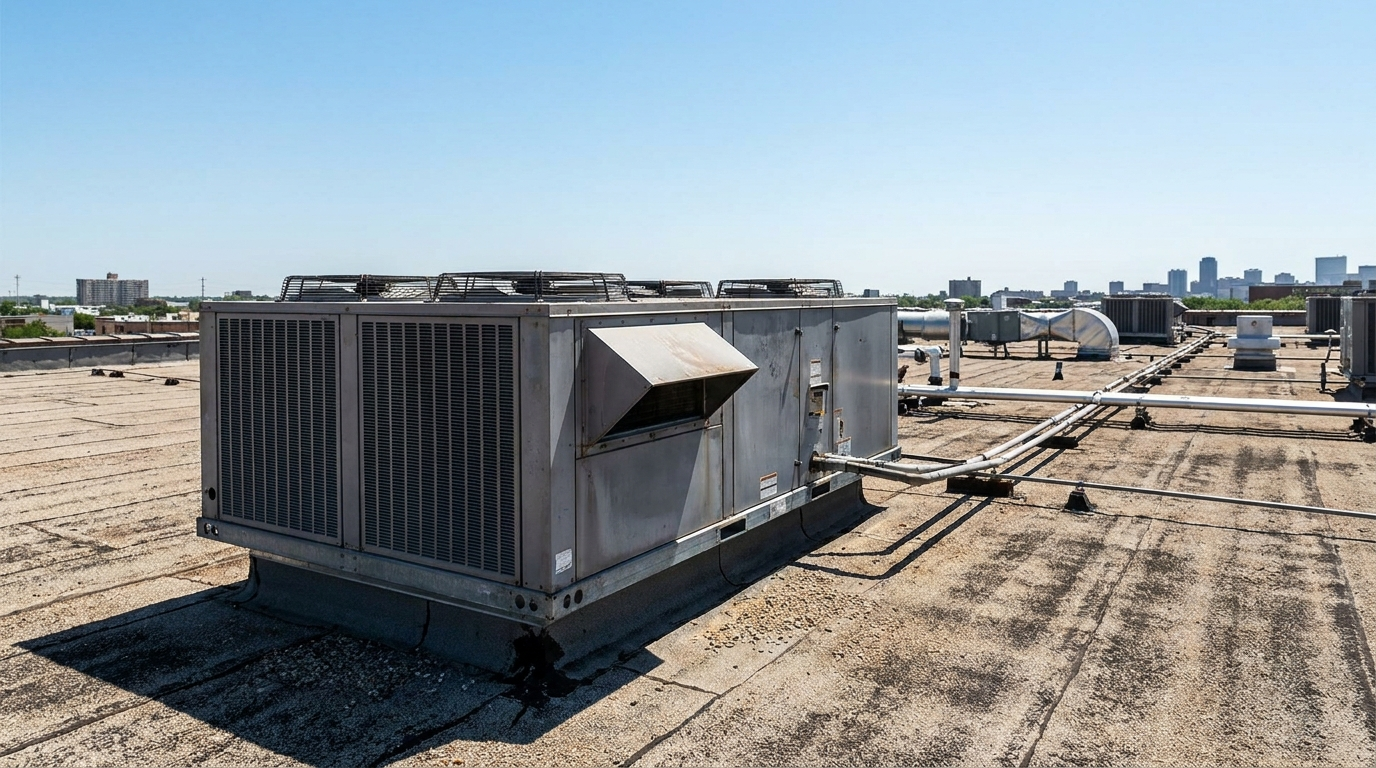
Every Hampton Roads operator knows the feeling. It is the middle of a July lunch rush, the dining room is filling up, and the air feels a little thicker than it should. The rooftop unit is running, you can hear it, but it is losing the fight. Summer here is uniquely hard on commercial HVAC, and the rooftop unit that coasted through spring is now asked to do its hardest work of the year on its worst day. Understanding why that happens is the first step to keeping your dining room comfortable and your kitchen crew functional when it matters most.
The core problem is heat rejection. A rooftop unit cools your space by pulling heat out of the air inside and dumping it into the air outside through the condenser coil. On a 95 degree afternoon, that outside air is already hot, so the unit has far less room to work with than it did in April. Now add the part most operators never see: a condenser coil packed with a season of dust, pollen, and cottonwood fluff. A fouled coil acts like an insulating blanket over the very surface that is supposed to shed heat, and the industry rule of thumb is a 15 to 20 percent efficiency loss from dirty coils alone. The compressor runs longer, runs hotter, and inches toward the failure that always seems to land on the busiest day.
Salt air is the local multiplier
What makes Tidewater different from inland markets is the salt. Coastal HVAC equipment corrodes several times faster than equipment a hundred miles west, and rooftop units take the worst of it because they sit fully exposed. Salt particles settle on the aluminum and copper coil fins, attract moisture out of our famously humid air, and start a slow chemical attack that pits the fins and eats at the metal. Over a few seasons that corrosion chokes airflow and drags down heat transfer even on a coil that looks clean from ten feet away. It is one more reason a unit in Virginia Beach or Norfolk needs more attention, not less, than the spec sheet assumes.
Do not forget the water side
Cooling pulls a surprising amount of moisture out of the air, and all of it has to drain away. In summer heat that condensate pan becomes a perfect home for algae and slime, and a blocked drain line is one of the most common and most damaging summer calls we expect to run. When the line clogs, water backs up into the pan and then finds the path of least resistance, which is usually your ceiling tile, your office, or the electrical inside the unit. A monthly flush of the condensate line and pan is cheap insurance against a mess that is anything but. The same goes for the make-up air unit that feeds your kitchen: when it falls behind, the whole back of the house turns into a sauna and your exhaust hood cannot do its job.
What pre-season service actually catches
A real preventive visit on a rooftop unit is a checklist, not a glance. Your technician should chemically clean the condenser and evaporator coils, verify the refrigerant charge and look for the oil traces that betray a slow leak, test the contactor and capacitor that start the compressor, read the compressor and fan amps against the nameplate, swap the filters, check belt tension on units that have them, and flush the condensate drain. Catching a weak capacitor or a slipping belt in May costs a few dollars in parts. Finding it after it has taken the compressor down in August costs a holiday weekend and a four-figure repair. That is the entire economic case for getting ahead of the season instead of waiting for the unit to tell you it has had enough.
When to call before it quits
You do not need gauges to spot a unit in trouble. Call when the rooftop runs constantly without ever cycling off, when the air from the vents is closer to room temperature than cold, when your electric bill jumps without a matching jump in business, when you see water stains spreading on the ceiling under the unit, or when the breaker for the rooftop trips more than once. Each of those means the system is already working past its limit, and the cost of acting early is almost always smaller than the cost of waiting for it to stop. Units on a KitchenGuard PM contract get the trip charge waived on every repair call, so there is never a reason to sit on a warning sign.
Want your rooftop units and make-up air on a real schedule, cleaned and checked before the heat hits, with a written report after every visit? That is exactly what our PM contracts are built for.
Call us at (757) 304-0029 or email [email protected] to set up a plan for your kitchen.