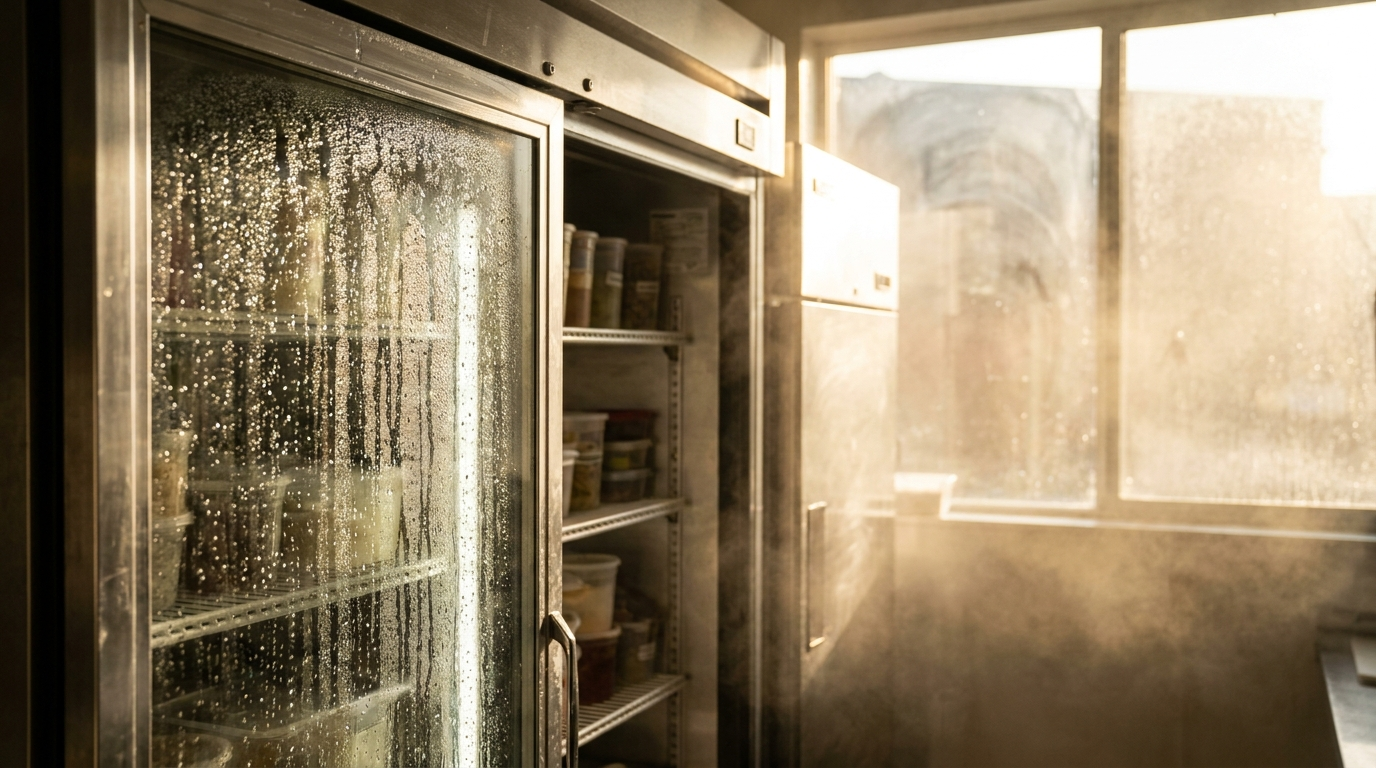
Your walk-in gets all the attention, but the reach-in coolers and prep tables on the line are the ones working hardest in July. They sit in the hottest part of the building, next to fryers and flat-tops, and their doors open hundreds of times a shift. When a Hampton Roads kitchen hits the high 80s inside during a summer rush, those small boxes are fighting a battle the rest of the year never asks of them. Understanding why is the first step to keeping your product safe and your repair bills down.
A reach-in cools the same way every refrigerator does: it pulls heat out of the cabinet and dumps it into the room through a condenser coil. The hotter the room, the smaller the temperature difference the coil has to work with, and the longer the compressor has to run to hold the same internal setpoint. On a 70 degree day that unit might cycle comfortably. In a 90 degree kitchen, it can run almost nonstop. Add a condenser coil packed with grease and dust, and the system simply cannot reject the heat fast enough, so the cabinet drifts up out of the safe zone right when you need it most.
The condenser coil is where summer is won or lost
If you do one thing for your reach-ins before the worst of the heat, clean the condenser coil. It is usually behind a grille at the top or bottom of the unit, and in a busy kitchen it collects an insulating blanket of airborne grease and flour within weeks. A standard reach-in needs that coil cleaned every three to four months, but a high-grease operation like a burger joint or a fryer-heavy line should be checking it monthly. Cut the power, brush the fins out with a stiff brush, then finish with a vacuum or compressed air. A clean coil can be the difference between a unit that holds 38 degrees all summer and one that climbs to 50 by mid-afternoon.
Door gaskets do quiet, expensive damage
The other summer weak point is the door gasket. Every time the rubber is cracked, torn, or no longer sealing, warm kitchen air leaks straight into the cabinet, and the compressor runs longer to make up for it. Worn gaskets can account for a large share of a unit's total cooling load, which means a few dollars of torn rubber can quietly add up to a real chunk of your power bill and a compressor that wears out years early. Wipe the gaskets down with warm soapy water so syrup and food debris do not glue them to the frame and tear them, and do the dollar-bill test: close the door on a bill and tug. If it slides out with no resistance, that section of seal is done. Gaskets are one of the cheapest parts on the whole machine and one of the most worthwhile to stay ahead of.
The warning signs worth a phone call
Reach-ins rarely fail without warning. Call before the box gives out if you see the cabinet temperature creeping above 41 degrees on a cold-holding unit, the compressor running without ever shutting off, frost or ice building inside the cabinet or on the back wall, water pooling underneath, or a condenser fan that has stopped spinning. Pay attention to product too: if the items nearest the door or in one corner are spoiling faster than the rest, that is the box telling you it is losing the fight. Acting on those early signals is almost always cheaper than an emergency call after a Saturday rush, and a whole lot cheaper than throwing out a cooler full of food.
Want your reach-ins, prep tables, and walk-ins checked and cleaned before the heat does the damage? That is exactly what a KitchenGuard preventive maintenance visit covers, with a written condition report every time.
Call us at (757) 304-0029 or email [email protected] to set up a plan for your kitchen.