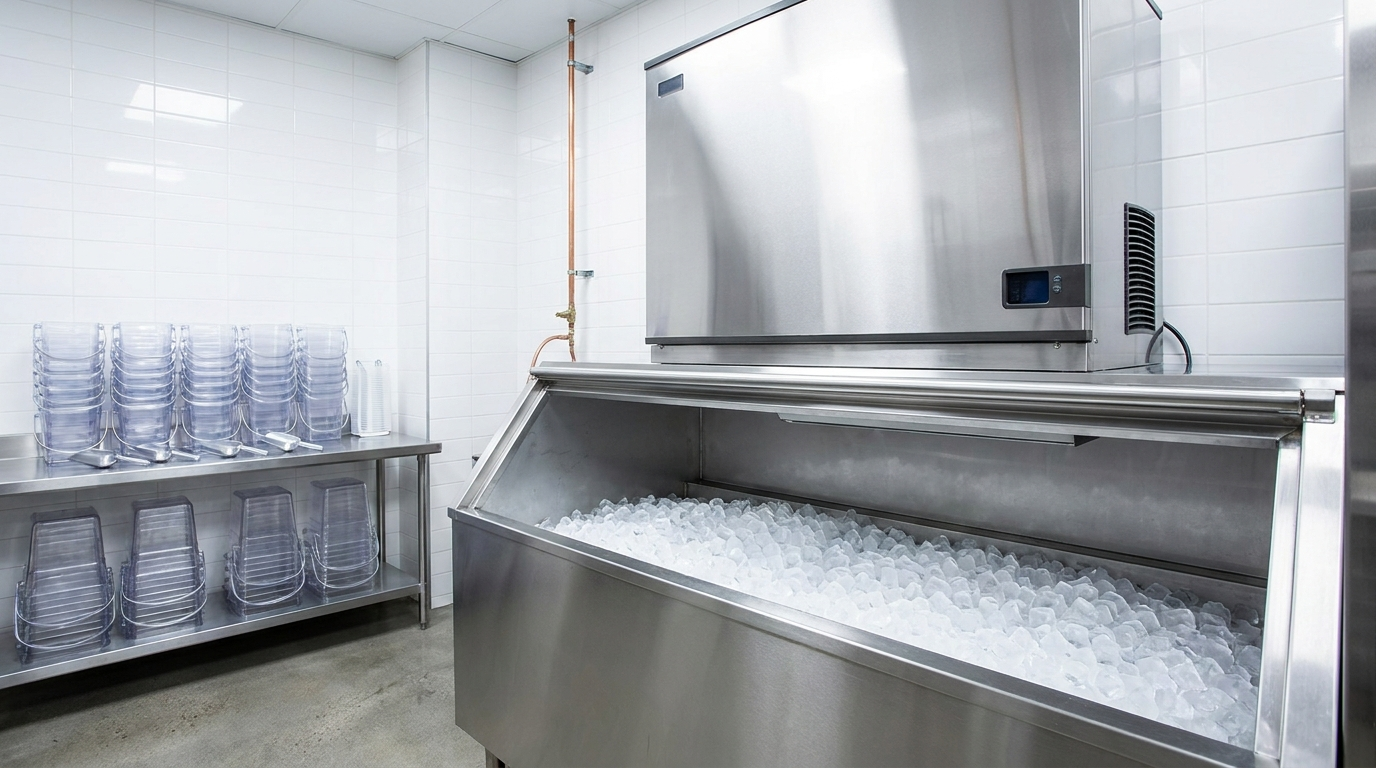
Every commercial ice machine that runs through a Hampton Roads summer is fighting a losing battle against heat, humidity, and the minerals in our local water supply. Warmer ambient temperatures accelerate the growth of biofilm, yeast, and slime inside the machine. Mineral deposits from hard water scale up the evaporator faster. And because July and August push ice demand to its peak, the machine runs harder and longer just when it needs the most attention. Cleaning your ice machine is not optional, and it is not the same as just wiping down the bin.
Cleaning and sanitizing are two separate steps
Most operators use the words interchangeably, but they describe two different chemical processes. Cleaning (or descaling) uses a nickel-safe acid solution to dissolve the mineral scale that builds up on the evaporator plate, water distribution system, and internal waterways. That scale is what makes cubes cloudy and slows harvest times. Sanitizing follows the cleaning step and uses a food-safe sanitizer to kill the biological contaminants: slime, mold, yeast, and bacteria. You need both, in that order. Sanitizing over mineral scale does not work well, and descaling alone leaves the biofilm in place. NSF/ANSI 12, the standard that governs commercial ice machines, requires both steps.
How often is often enough
NSF/ANSI 12 calls for a minimum cleaning and sanitizing frequency set by the manufacturer, which is typically every six months. But that is the floor, not the target. In Hampton Roads, where summer humidity is high and water mineral content is significant, six months is aggressive for the warmer half of the year. A machine running through June, July, and August should be cleaned and sanitized at least every three months during that window. If your machine uses a water filter (and it should), the filter change interval is a reasonable trigger: when the filter comes out, the cleaning goes in. Health departments in Virginia may also require documented cleaning records, so keeping a log is good practice regardless.
What staff can do versus what needs a technician
There is a surface-level cleaning routine that staff should own, and a deeper cleaning cycle that should involve a trained technician. On the staff side: wipe down the exterior and dispenser area daily, inspect the bin for visible slime or discoloration at least weekly, and report anything unusual immediately. The internal cleaning cycle (the one that involves shutting the machine down, running the acid cleaner through the water system, and then the sanitizer) requires following the manufacturer's procedure for your specific model, using the correct chemical concentrations, and rinsing thoroughly so no residual chemical ends up in the ice. Done wrong, you either damage internal nickel or stainless components with too strong a solution, or you leave sanitizer residue in the food product. A technician also inspects the water inlet valve, float valve, pump, and evaporator while the machine is open, catching mechanical wear before it becomes a breakdown.
The health inspection angle
Virginia Department of Health food service inspectors treat ice as a food product, which means ice machine sanitation falls under the same standards as any other food contact surface. An inspector who finds pink or black slime in the bin, a foul smell, or a machine with no cleaning log can issue a violation on the spot. In the worst cases, machines get tagged out of service until the cleaning is documented and verified. A July rush is the worst possible time to discover you are four months past due. The cost of a routine cleaning service call is a fraction of what a failed inspection costs in fines, lost service time, and the labor scramble to source bagged ice for a full dinner shift.
What a professional cleaning service covers
When we service an ice machine for a cleaning cycle, we run the manufacturer's prescribed descale procedure, sanitize all water-contact surfaces, inspect and clean the condenser coil (a dirty condenser is the single biggest reason for slow ice production in summer heat), check the water filter and replace it if needed, verify float and valve operation, and test a full freeze and harvest cycle before we leave. We also note anything that looks like early mechanical wear so you can decide whether to address it now or plan for it. The whole service usually takes one to two hours, and the machine is back in production the same day.
If your ice machine has not had a professional clean and sanitize this season, now is the right time. With the Fourth of July weekend right around the corner and the hottest weeks of summer still ahead, getting the machine serviced before demand peaks is the move that prevents problems.
Call (757) 304-0029 or email [email protected] to schedule a cleaning and inspection for your ice machine.