Most operators think of the exhaust hood and the make-up air unit as two separate pieces of equipment. They are not. They are two halves of one system, and when they fall out of balance, the consequences land squarely in the territory of grease, smoke, and fire risk. This is one of the most overlooked relationships in a commercial kitchen, so it is worth a few minutes to understand.
How the pair is supposed to work
The exhaust hood pulls heat, smoke, and grease-laden air off your cooking line and sends it up and out through the roof fan. The make-up air unit, often called the MAU, replaces every cubic foot of air the hood removes. Pull air out of a sealed building without replacing it and you create negative pressure. The kitchen starts fighting itself: doors get hard to open, the hood cannot capture properly, and combustion appliances can struggle to vent. A balanced system exhausts and replaces air in equal measure, so the line stays clear and the building breathes.
Where the fire risk comes in
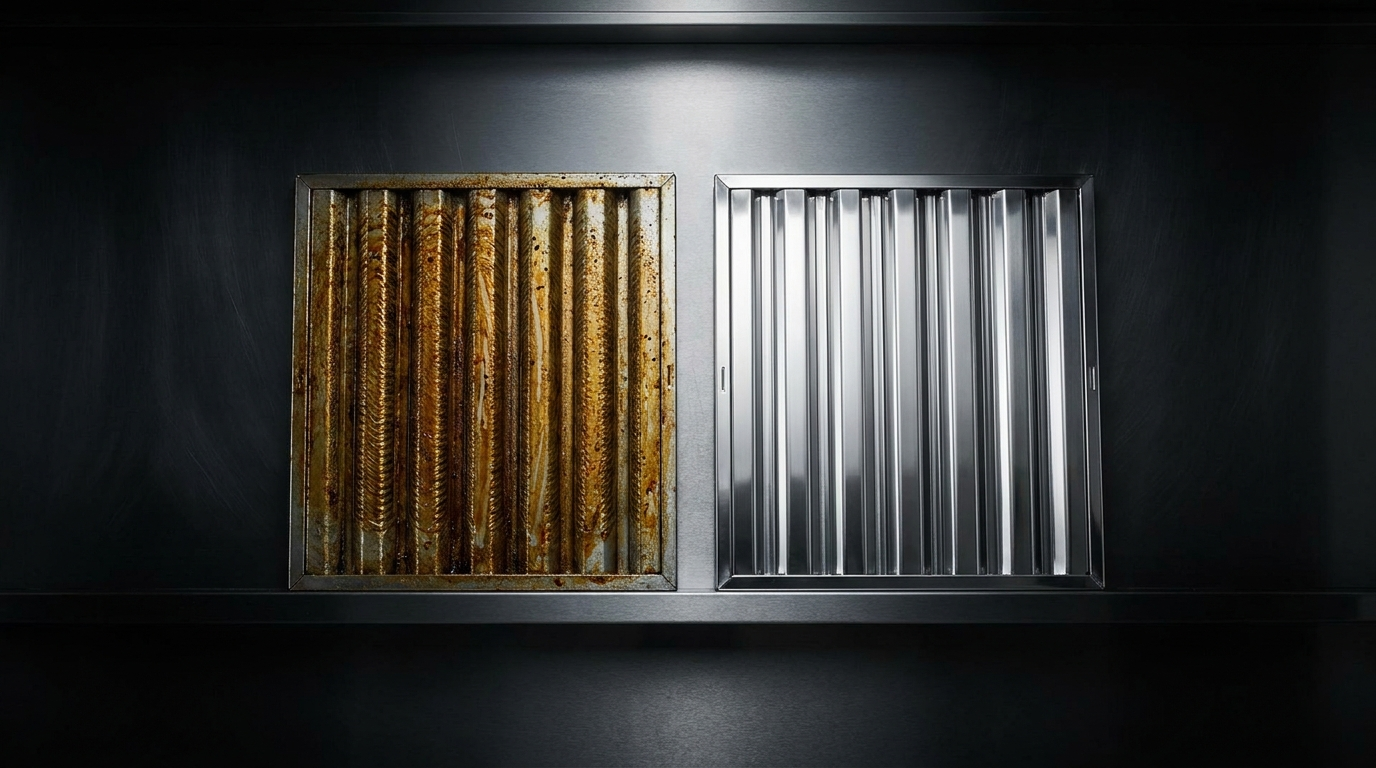
When exhaust airflow drops, whether from a slipping fan belt, a tired motor, or filters caked with grease, the hood stops capturing smoke and vapor effectively. That grease does not vanish. It condenses inside the hood, in the baffle filters, and up the duct, building a flammable layer that is the single biggest fuel source in a kitchen fire. A weak or unbalanced system accelerates that buildup. Add a flare-up on the line, and you have the conditions that turn a small grease fire into a duct fire. Keeping the hood pulling at its designed rate is not just about comfort and code, it is about keeping that grease load moving out of the building instead of accumulating where it can ignite.
The signs your balance has drifted
You do not need instruments to notice trouble. Smoke or steam drifting out from under the hood instead of being drawn up is the clearest sign exhaust is weak. Doors that suddenly stick or slam, a noticeable draft, pilot lights that struggle, or a greasy film building on nearby walls and ceilings all point to a system out of balance. New rattling or squealing from the rooftop fan usually means a belt or bearing on its way out. Any of these is worth a call before it gets worse.
What regular service actually does
A ventilation PM visit checks fan belts and motors, cleans and inspects the baffle filters, confirms the exhaust and make-up air are moving at the rates the system was designed for, and looks for the early grease buildup that signals a capture problem. None of this replaces your required hood and duct cleaning by a certified vendor, which is a separate fire-code obligation, but it keeps the mechanical side of the system healthy so that cleaning actually has a fighting chance. Catch a worn belt at a scheduled visit and it is a quick part. Let it snap mid-service and you are cooking under a hood that is no longer protecting you.
If your hood is letting smoke escape, your doors are sticking, or you simply have not had the ventilation checked in a while, it is worth a look. We service exhaust hoods and make-up air units across Hampton Roads and keep the whole system in balance.
Call (757) 304-0029 or email [email protected] to schedule a ventilation check.