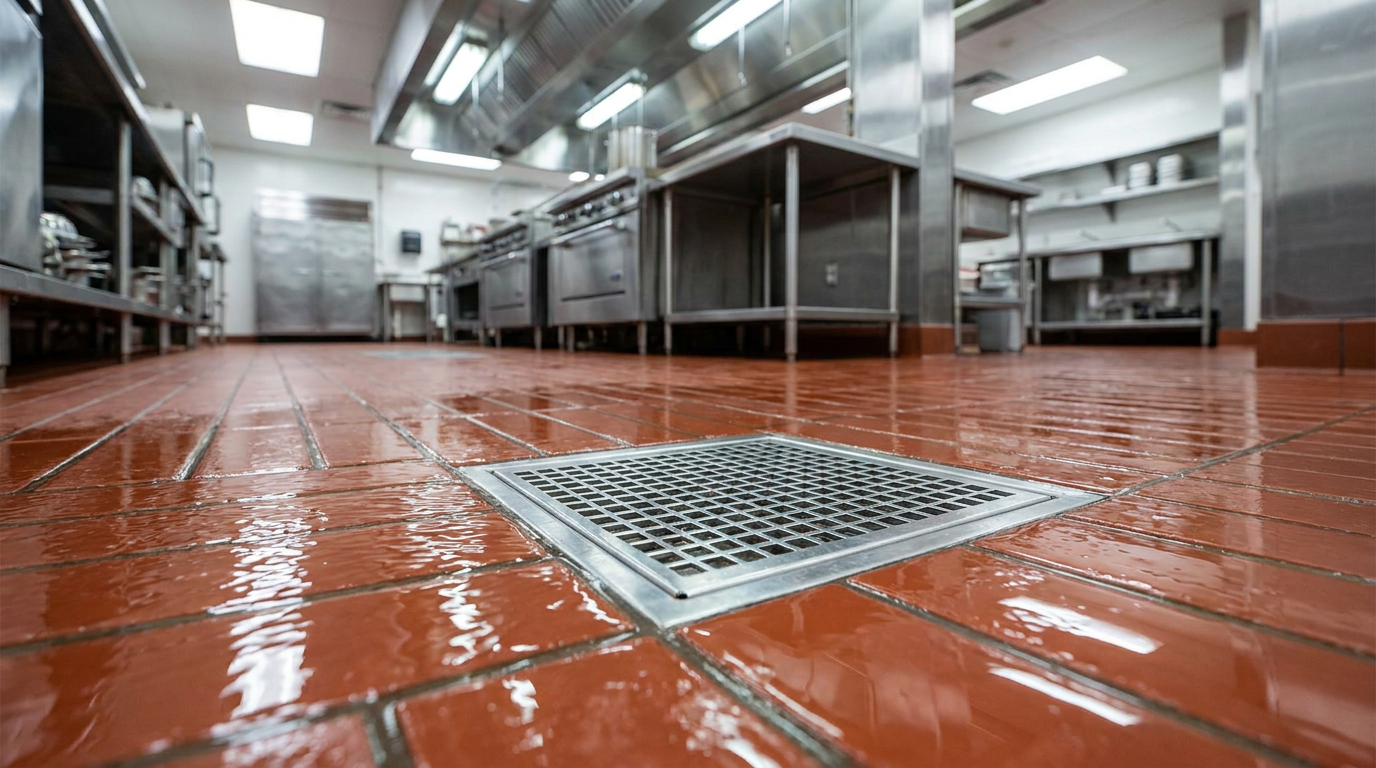
Every kitchen has plumbing it never thinks about until it stops working. Floor drains and grease traps are at the top of that list. They sit out of sight, do their job quietly for months, and then pick the worst possible moment to remind you they exist, usually a hot Saturday during a full dining room. In Hampton Roads, summer is when neglected drains go from a background nuisance to a genuine problem, because heat speeds up the breakdown of the fats and food waste sitting in the lines, and that means smell, flies, and slow drainage all arrive at once.
Start with the floor drains, because they are the ones your staff touches every day. The trough and floor drains under your dish area, prep sinks, and walk-in carry away a constant stream of food particles, starch, and grease. When that debris settles and the drain is not flushed and cleaned regularly, it forms a sludge that narrows the line and breeds bacteria. The first sign is a faint sewer odor that gets stronger as the day warms up. The second sign is standing water that takes longer and longer to disappear. Neither one fixes itself, and pouring bleach down the drain only masks the smell for an hour while doing nothing about the blockage building downstream.
The grease trap is where most shutdowns begin
The grease trap, or the larger in-ground grease interceptor, is the single most common cause of a kitchen drain backup. Its whole job is to catch the fats, oils, and grease (the industry calls it FOG) before they reach the sewer and harden into a blockage. The catch is that the trap only works until it fills up. The widely used standard is the 25 percent rule: once the combined layer of grease and solids reaches a quarter of the trap's depth, it has lost its ability to separate, and FOG starts riding straight through to your sewer line. That is the moment a manageable maintenance item turns into a backed-up floor and a closed kitchen.
How often a trap needs to be pumped depends on how much you fry, grill, and cook with animal fats and dairy, plus the size of the trap itself. A high-volume kitchen running heavy frying every day can fill a small interior trap in a matter of weeks, while a lighter operation might go a couple of months. Most commercial kitchens land somewhere in the range of cleaning every one to three months, and many Hampton Roads municipalities require documented cleaning on a set schedule to stay in compliance with their fats, oils, and grease program. The honest rule of thumb: if you are not sure when yours was last cleaned, it is overdue.
A simple routine that prevents the emergency
Keeping drains and traps healthy is not complicated, it just has to actually happen. Scrape and squeegee plates and pans into the trash, never the sink, so solids and grease never enter the line in the first place. Use drain strainers and empty them often. Have staff flush floor drains with hot water at the end of each shift and brush the grates clean weekly. Keep a written log of every grease trap cleaning, both for compliance and so you can see your real interval instead of guessing. And keep cooking oil out of every drain entirely, collect it for your rendering pickup instead. These habits cost almost nothing and they head off the expensive version of this problem.
When a drain is already slow, a trap is overdue, or you are smelling sewer gas you cannot chase down, that is the point to bring in a professional rather than keep pouring chemicals at it. A proper service clears the line, pumps and inspects the trap, and finds the spot where things are actually backing up, which is often further down than a plunger can reach. At KitchenGuard we handle floor drain service, pre-rinse and fixture repair, and the plumbing connections that tie your kitchen together, so a drain that is starting to turn does not become the reason you close early on your busiest night.
Slow floor drains, a grease trap you cannot remember cleaning, or a smell you cannot place? Get ahead of it before the summer heat forces the issue.
Call us at (757) 304-0029 or email [email protected] and we will take a look.