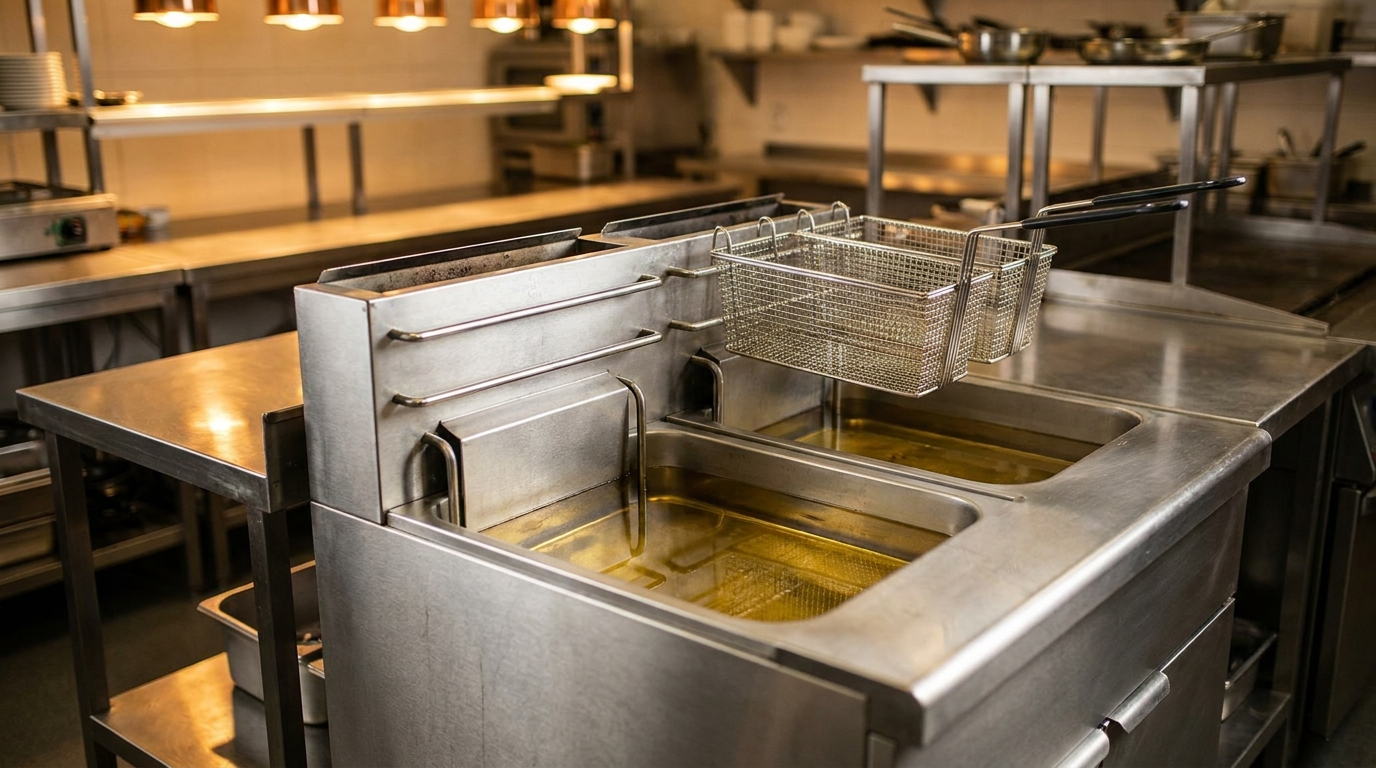
The fryer is the workhorse of most Hampton Roads kitchens. It runs hot for hours, it touches a huge share of the menu, and when it goes down on a Friday night the whole line feels it. The good news is that fryers are also among the most forgiving pieces of equipment you own, as long as you treat them to a steady routine. Almost every fryer failure we expect to see, from a tripped high-limit to a dead thermostat to a vat that will not hold temperature, traces back to neglect that built up quietly over weeks. A simple program at three levels, daily, weekly, and professional, prevents most of it.
Start with the oil, because oil is the heart of the whole operation. Frying oil breaks down a little every hour it sits hot, and crumbs and food particles speed that breakdown dramatically. Filtering the oil at least once a day, more in a high-volume kitchen, pulls out the debris that would otherwise carbonize on the heating elements and burn into your next batch of food. Skimming through the shift, keeping the oil at the right level, and shutting the fryer down or idling it back during slow stretches all stretch oil life and protect the equipment underneath it. Topping off with fresh oil helps the level, but it does not rescue oil that is already dark, foamy, and smoking early. When the oil is done, change it, because tired oil cooks slower, tastes worse, and runs the fryer harder to hold the same temperature.
The weekly boil-out earns its keep
Daily care keeps the oil clean, but only a weekly boil-out gets the vat itself clean. A boil-out means draining the oil, filling the vat with water and a fryer-specific cleaning solution, and bringing it up to a gentle boil to lift the baked-on grease and carbon that daily filtering never reaches. That hardened buildup is not just cosmetic. It insulates the heating elements and the vat walls, which forces the burner or elements to work harder and longer to hit temperature, and it gives food an off flavor no amount of fresh oil will fix. Follow your manufacturer's instructions on the cleaner and the soak time, rinse thoroughly, and dry the vat completely before refilling, because even a little water left behind will make hot oil spit and pop dangerously when you fire it back up.
Temperature is a safety issue, not just a quality one
A fryer that cannot hold its setpoint is telling you something. If the oil swings high and low, runs hotter than the dial says, or takes far too long to recover after you drop a basket, the thermostat or the temperature probe is drifting and needs to be verified with a trusted probe thermometer and recalibrated. This matters for more than crispness. Oil that overshoots its target gets closer to its smoke point and eventually its flash point, and an overheating fryer is one of the leading causes of commercial kitchen fires. Every fryer also has a high-limit safety control that is supposed to cut the heat if the oil climbs too far, and that control has to be tested, not assumed. If your fryer keeps tripping its high limit, do not just reset it and walk away, because the reset is a warning that something upstream has failed.
What a professional visit adds
Daily and weekly work is yours to own, but some of the most important checks need a technician with gauges and a meter. On a professional visit we calibrate the thermostat and test the high-limit safety control, inspect gas burners and orifices or the electric elements and contactors, check the igniter and flame on gas units, look over the gas connection and hose for wear, and clean the areas of the cabinet your crew cannot safely reach. Manufacturers generally recommend this kind of service twice a year for a heavy-use fryer and at least once a year for lighter use. The reason is simple economics: a worn igniter, a failing element, or a thermostat creeping out of calibration is a small, planned repair today, and a dead fryer in the middle of service tomorrow.
None of this is complicated, and that is the point. A fryer that is filtered daily, boiled out weekly, and checked by a technician twice a year will outlast and outperform an identical fryer that is run until it quits, and it will do it while using less oil and less energy along the way. Build the routine into your closing checklist, hold the line on the weekly boil-out even when the week is busy, and put the professional visits on a schedule so they actually happen. Your cooks get a fryer that recovers fast and cooks true, and you get one less thing that can blow up your Friday night.
Want your fryers and the rest of your cooking line checked, calibrated, and safety-tested on a real schedule, with a written report after every visit? That is what KitchenGuard service is built around.
Call us at (757) 304-0029 or email [email protected] to set up service for your kitchen.