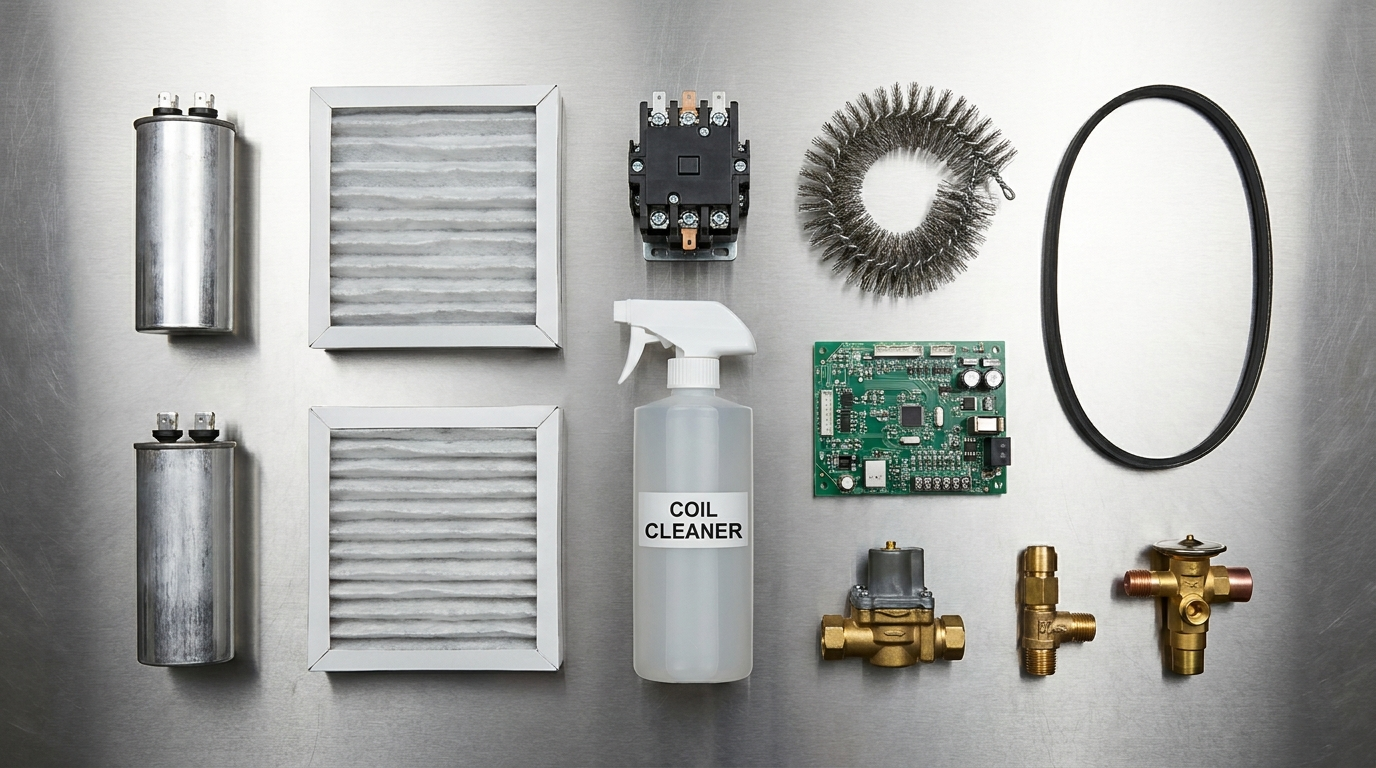
Most equipment failures do not arrive out of nowhere. A compressor that quits on a Saturday night was running hot and dirty for weeks. A fryer that will not hold temperature had a tired thermostat that nobody checked. The difference between a kitchen that limps through a Hampton Roads summer and one that runs clean is almost never the equipment itself, it is whether anyone has a routine for looking after it. Late June is the right time to put that routine in place, because the heat, the holiday crowds, and the constant door traffic are about to test every machine you own.
A good maintenance routine is built in tiers. Some tasks are quick and visual and belong to your kitchen staff, done every shift or every week. Others are technical, involve refrigerant, gas, or electrical work, and belong to a trained technician on a quarterly or twice-a-year visit. The mistake operators make is trying to put everything on one list, which means nothing gets done. Split the work by who is qualified to do it and how often it needs doing, and suddenly the whole thing becomes manageable.
What your staff should own, daily and weekly
Your team can handle the cleaning and the watching, and that catches more problems than people expect. Daily, someone should wipe down fryer and range exteriors, scrape and clean griddle surfaces and drip trays, and write down the temperature of every refrigerator and freezer. That temperature log is the single most valuable habit in the kitchen, because a unit drifting from 36 to 40 degrees over a week is telling you it is in trouble long before it fails. Weekly, add a fryer boil-out, a wipe-down of door gaskets with warm soapy water, a look at the exhaust hood filters, and a quick glance at the condenser coils on your refrigeration to see if grease and dust are building up. None of this requires a tool kit, just a checklist taped to the wall and a manager who confirms it got done.
What a technician should own, quarterly and twice a year
The other half of the routine is the work that keeps your warranties intact and your equipment legal to run. A trained technician should be deep-cleaning condenser coils, checking refrigerant charge and looking for leaks, testing electrical connections and amp draws, verifying thermostat and control calibration, inspecting gas connections and burners, and giving the hood and make-up air system a real going-over. Refrigeration, cooking, and ventilation equipment generally wants a professional check at least twice a year, and high-use or high-grease lines benefit from quarterly attention. This is exactly the work a preventive maintenance contract is built around, and it is the part of the routine that turns surprise breakdowns into scheduled, planned-for visits.
Write it down, or it did not happen
The piece almost every kitchen skips is documentation, and it is the piece that pays off the most over time. Keep a simple record of what was done, when, and what was found: service dates, parts replaced, temperature trends, and any notes from your technician. After a few months that record starts telling you things no single visit can, like which unit is on its third repair this year and is quietly asking to be replaced, or which coil cleaning interval is actually keeping a cooler in range. It also protects you. A documented maintenance history supports warranty claims, satisfies health inspectors, and gives you real numbers when it is time to budget for a capital replacement instead of guessing.
You do not need software or a complicated system to start. A laminated daily and weekly checklist for the line, a temperature log by each cold box, and a standing appointment with a technician for the technical work will put you ahead of most kitchens in Hampton Roads. Build the routine now, before the busiest weeks of the year, and the payoff is a summer with fewer 8 p.m. phone calls, less spoiled product, and equipment that lasts the years you paid for. The goal is not perfection, it is consistency, because consistency is what keeps small problems small.
Want the technical half of that routine handled on a schedule, with a written condition report after every visit? That is exactly what a KitchenGuard preventive maintenance plan does, so you and your staff can focus on the daily and weekly basics.
Call us at (757) 304-0029 or email [email protected] to build a plan around your kitchen.